
 Connect With Our Team
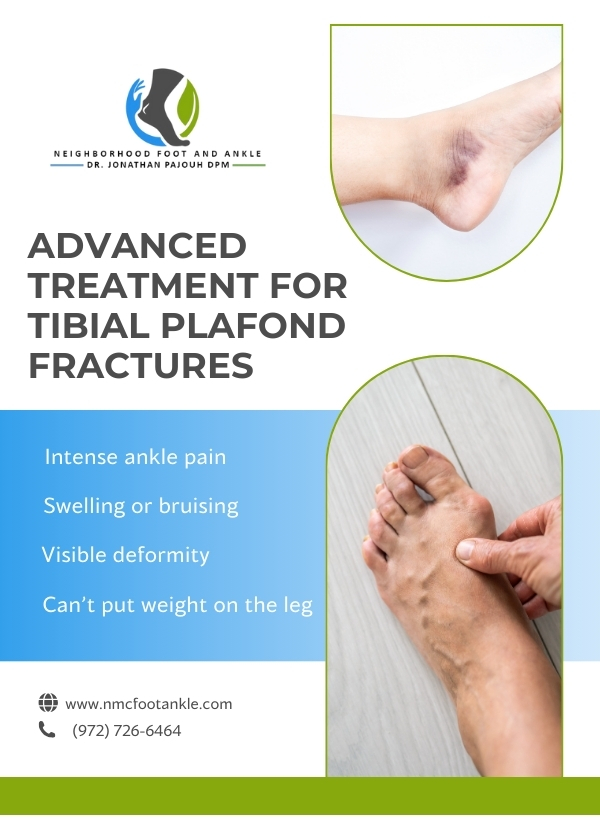
When most people think of a broken ankle, they imagine a simple twist, some swelling, and a cast. But not all ankle injuries are minor—and one of the most severe types is called a Pilon fracture (also known as a Tibial Plafond fracture). This isn’t your everyday sprain or small crack in the bone. A Pilon fracture is a serious and complex break that demands prompt and specialized care. If you’ve experienced a hard fall or been in a car accident and now have intense ankle pain, swelling, or can’t put any weight on your leg—this could be more than just a sprain. This blog post will break down what you need to know.
What Is a Pilon Fracture?
A Pilon fracture is a break at the bottom of the tibia, or shinbone, right where it meets the ankle joint. This area—called the plafond—is critical for bearing weight and allowing smooth ankle movement.
These fractures usually occur due to high-energy trauma, like:
-
Falling from a significant height
-
Motor vehicle accidents
-
Direct impacts to the foot or ankle
Because the injury often affects the cartilage surface of the ankle joint, it can be difficult to treat and may have long-term effects on mobility if not handled properly. Dr. Pajouh, a skilled podiatrist at NMC Foot & Ankle, specializes in diagnosing and treating complex ankle injuries like tibial plafond fractures, using advanced techniques to restore function, reduce pain, and help you return to your normal activities safely and effectively.
Common Symptoms
How do you know if you might have a Pilon fracture? Here are the red flags:
- Severe pain in the ankle or lower leg
- Swelling and significant bruising
- Inability to bear weight
- Visible deformity or misalignment of the ankle
- Numbness or tingling (if nerves are involved)
If these symptoms follow a fall or accident, don’t assume it’s a routine injury. You could be dealing with a serious fracture that needs urgent care.
Why Pilon Fractures Require Specialized Treatment
Unlike other ankle fractures, Pilon fractures can involve:
-
Multiple broken pieces of bone
-
Damage to surrounding soft tissues and ligaments
-
Disruption of the joint surface
-
A high risk of arthritis later on
This complexity means treatment isn’t always straightforward. In many cases, surgery is required to realign the bones and stabilize the ankle. Sometimes, swelling must subside before surgery can even be performed safely.
At NMC Foot & Ankle Center in Frisco, Dr. Pajouh uses advanced imaging and minimally invasive techniques whenever possible to ensure the best outcome for your recovery and long-term joint health.
What Happens If You Ignore It?
Delaying treatment—or assuming the pain will “just go away”—can lead to permanent damage. Without proper care, a Pilon fracture can result in:
-
Chronic pain
-
Ankle instability
-
Post-traumatic arthritis
-
Limited range of motion
-
Lifelong mobility issues
Early intervention is critical to preserve function and avoid complications. You deserve a full recovery—not months or years of unnecessary pain.
Recovery: What to Expect
Treatment for a Pilon fracture often involves:
-
Initial immobilization – to reduce pain and swelling.
-
Surgery (if needed) – to properly align the bones and stabilize the joint.
-
Physical therapy – to restore motion, strength, and balance.
-
Gradual return to weight-bearing – based on healing progress and X-rays.
Full recovery can take several months, depending on the severity of the injury. But with expert care, most patients can return to an active lifestyle.
How Dr. Pajouh can help
At NMC Foot & Ankle Center, Dr. Jonathan Pajouh is a board-certified reconstructive foot and ankle surgeon who specializes in complex fractures like the Pilon. His goal is not just to heal the bone—but to protect your joint function, reduce the risk of long-term complications, and get you back on your feet with confidence.
Don’t Wait—Act Fast
If you’ve suffered a fall, accident, or severe ankle injury, don’t wait and see. Time matters when it comes to serious fractures. Dr. Pajouh offers same-day appointments so you can get the expert diagnosis and treatment you need—right when you need it.